

Stop Asking Copywriters to Clone Your Competitors
Why imitating other brands' messaging is a strategy that undermines everything you're trying to build


There is a brief that lands in copywriters’ inboxes with surprising regularity. It goes something like this: “Can you make it sound more like this company?” Sometimes it comes with a link. Sometimes it comes with a screenshot. Sometimes it arrives as a forwarded email with a note that says, “this is the vibe we’re going for.”
And look, the impulse is understandable. A competitor is doing well — or at least appears to be. Their website copy sounds confident. Their ads are polished. Their social captions get engagement. Of course you want a piece of that. Of course, you wonder if their tone is the secret ingredient.
That’s a huge assumption. And as my journalism mentor was fond of saying, “when you assume, you make an ASS out of U and ME.” He wasn’t wrong.
Asking a copywriter to mirror your competitors is a bit like ordering the exact same meal as a stranger at a restaurant because they seem to be enjoying it. You have no idea whether they have allergies, dietary preferences, or whether they’re enjoying it at all. You are making a major decision based on surface-level observation, and the result is rarely satisfying.
There are four specific reasons why this approach tends to backfire. Understanding them will help you see why finding your own voice is a practical business decision.
Your competitors have different goals than you do
This might sound obvious once you say it out loud, but it gets overlooked constantly. Even within the same industry, two brands can be pursuing completely different objectives, targeting different customer segments, and operating at entirely different stages of growth.
A scrappy startup trying to disrupt an established market has nothing in common — strategically — with the legacy player that’s spent decades building brand recognition and is now focused on protecting its existing customer base. One needs to earn trust from scratch. The other needs to remind loyal customers why they shouldn’t leave. The copy that serves one of those goals will actively undermine the other.
Product mix matters too. Even if two companies sell broadly similar things, the specific products they’re pushing, the price points they’re defending, and the objections they need to overcome can differ enormously. A brand selling a premium product needs copy that justifies the investment. A brand competing on value needs copy that makes affordability feel like a smart choice, not a compromise.
Your messaging needs to reflect your positioning in the market, your customers, and your business objectives. A blurry photocopy of someone else’s strategy does none of that. It just makes you sound like you’re not quite sure who you are.

You have no idea whether their copy is even working
This is perhaps the most important point on this list. It deserves a moment of honest reckoning.
You are not inside your competitor’s analytics dashboard. You have not seen their A/B test results. You do not know their conversion rates, their time-on-page data, their email open rates, or what their customer acquisition costs look like. You have not sat in on their team meetings. You do not know whether their CMO is quietly panicking about underperforming campaigns.
What you have is the public face of their marketing. And the public face of marketing is almost always a curated highlight reel. It looks polished because polished things get published. It does not tell you whether those polished things drive revenue.
For all you know, the copy you’re scrambling to replicate is the exact thing their team is actively working to fix. The campaign you admire from the outside might be a cautionary tale on the inside. You’re making strategic decisions based on incomplete information and assuming it’s a map when it might be a mirage.
There is also a timing problem here. Even if their copy is working right now, that’s no guarantee it will continue to work, or that the same approach will work for a different brand with different offerings and a different audience. Performance data is context-dependent. Strip the context and you strip the insight.
You’ll always be a step behind
When you build your brand voice around someone else’s, you lock yourself into a permanent follower position. And follower positions are exhausting, expensive, and ultimately futile.
Consider the timeline. You notice a competitor’s messaging. You decide you want to sound more like them. You brief your copywriter, go through rounds of revisions, get approval from stakeholders, and eventually publish. That entire process takes time — sometimes weeks, sometimes months. Meanwhile, your competitor has not been standing still. They have been testing, iterating, and evolving. The version you were chasing no longer exists.
It’s like repainting your house to match your neighbor’s right as they are choosing a new color. You have invested real resources in catching up to a moving target, and the moment you arrive, the target has moved again.
Brands that lead their categories do not do so by chasing competitors. They do it by developing such a clear sense of their own identity that competitors end up chasing them. That kind of clarity doesn’t come from imitation. It comes from the more demanding — and more rewarding — work of figuring out what is genuinely true and compelling about your brand, and then saying it with conviction.
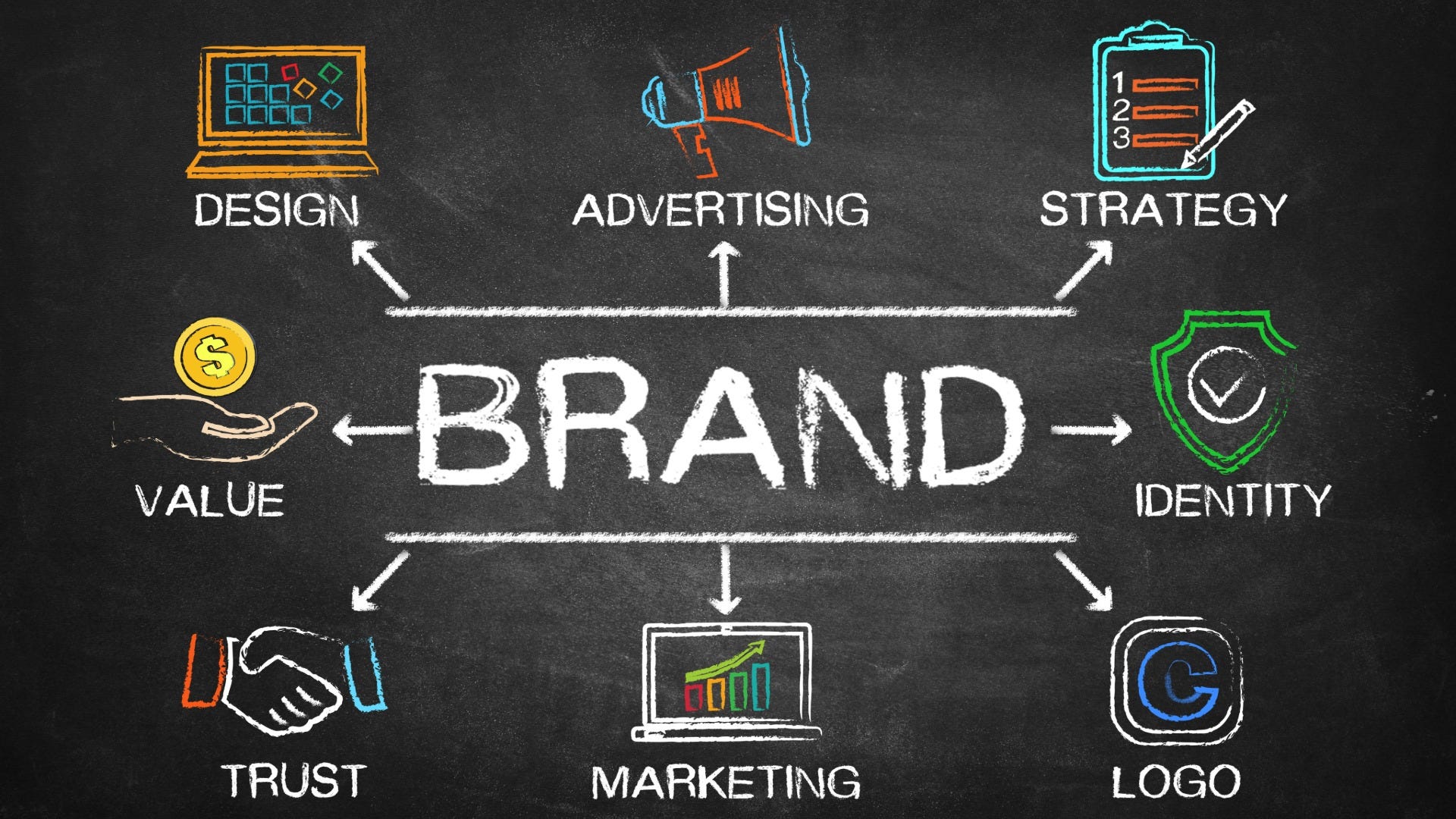
Imitation dilutes your brand identity
Brand voice is not a decorative layer you apply at the end of the marketing process. It is not a stylistic preference or a mood board exercise. It is one of the most powerful commercial tools your brand has, because it is how customers recognize you, learn to trust you, and ultimately choose you over the alternatives.
The moment you start sounding like everyone else in your industry, you lose that tool. You become part of the background noise. You make the buying decision harder for customers because you’ve removed one of the signals they use to tell brands apart. And in a crowded market, being indistinguishable from your competitors is not a neutral outcome — it’s an active disadvantage.
Generic copy is forgettable copy. And forgettable copy does not convert. It does not build loyalty. It does not generate word-of-mouth. It does not make anyone feel like they’ve found the right brand. It just exists, quietly failing to do any of the things you wanted it to do.
Your brand identity, expressed consistently through a voice that is genuinely your own, is a long-term asset. Every piece of copy that sounds unmistakably like you is a deposit into that asset. Every piece of copy that sounds like someone else is a withdrawal.
What to do instead
If imitating competitors is the wrong move, what is the right one? The answer is less glamorous, but far more effective. Do the work of understanding who you are and who your customers are, and then say what is true.
Start with your customers. Talk to them directly if you can. Read their reviews, their support tickets, their social comments. Pay attention to the specific words they use to describe your product and the problems it solves. Good copy is often less about invention and more about careful listening — finding the language that already exists in your customers’ heads and reflecting it back to them.
Then dig into your data. What messages have resonated in the past? Which subject lines got opened? Which landing page headlines drove conversions? Your own historical performance is a far more reliable guide than your assumptions about what’s working for someone else.
From there, the job is articulating what makes your brand genuinely different — not just different from competitors, but different in ways that matter to the people you’re trying to reach. That differentiation becomes the foundation of your voice. Say it clearly, say it compellingly, and say it consistently.
And when you work with a skilled copywriter, trust them to guide you through this process. A good copywriter does not just write words. They ask the right questions, surface the insights that are already there, and shape them into something that sounds like you at your most articulate. That is a very different brief from “make it sound like this other company,” and it produces very different results.
Your competitors are already doing what they do. The market does not need another version of them. It needs you — clearly, confidently, and in a voice that is unmistakably your own.